

Open Archive FAQs
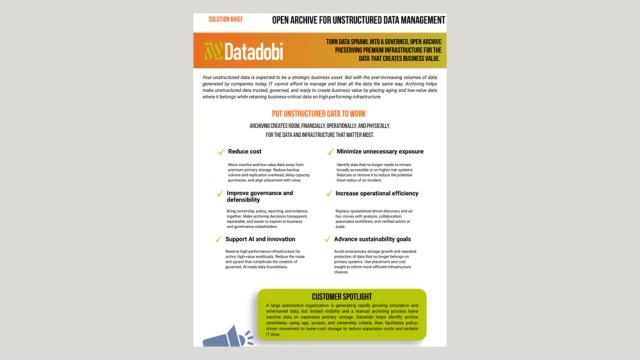
Enterprise data archiving is the process of moving aging, inactive, or low-value data out of primary storage and into an archive that is more cost-effective and easier to manage. It helps organizations reduce storage costs, improve backup efficiency, and keep unstructured data growth under better control.
Data archiving software helps organizations identify data that is no longer active or high value, then move it from expensive primary storage to a more appropriate archive location. For enterprise unstructured data environments, effective archiving software should also provide visibility, policy control, reporting, and support for heterogeneous storage.
ROT data stands for redundant, obsolete, and trivial data. It includes duplicate files, outdated information, and data with little or no ongoing business value. Identifying ROT data is a critical first step in reducing storage waste and creating an effective open archive.
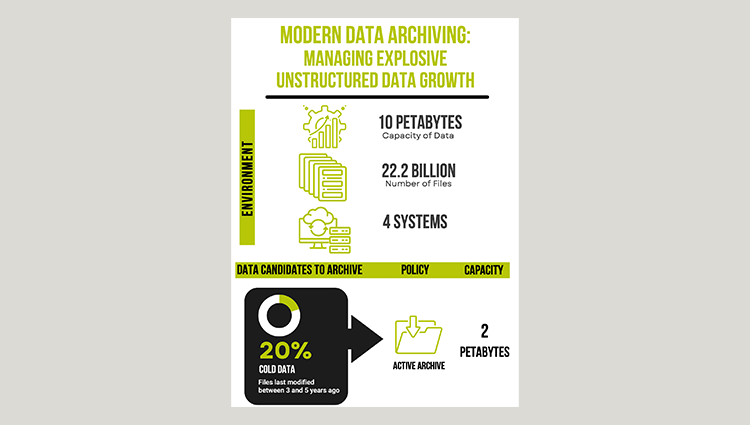
Archiving reduces storage costs by moving low-value or inactive data away from expensive primary storage and into lower-cost storage tiers, secure archive platforms, or cloud services. It can also reduce backup volume, improve replication efficiency, and delay unnecessary storage purchases.
StorageMAP helps teams analyze unstructured data across complex storage environments, identify ROT data and aging files, apply archiving policies, and report on outcomes. This gives organizations a more controlled way to reduce storage and backup costs while maintaining visibility.
Backup is designed to create recoverable copies of data for operational resilience. Archiving is designed to move inactive or low-value data to a more appropriate long-term location. An open archive strategy can reduce the amount of unnecessary data that must be backed up repeatedly.
Yes. StorageMAP supports ongoing policy monitoring so organizations can adjust archiving strategies as business needs, storage economics, governance requirements, and data growth patterns change.
Want to reduce storage costs without losing control of unstructured data? Datadobi can help you identify ROT data, build an open archive strategy, and move from one-time cleanup to ongoing optimization.